M18x1.5 O2 sensor spacer: the complete fitment & install guide
If your check-engine light points at a catalyst-efficiency code but the catalytic converter itself checks out fine, a downstream O2 sensor spacer is a low-cost diagnostic step before replacing a converter. This guide covers what the part does, whether your car uses the M18x1.5 thread, and a careful install procedure.
What an O2 spacer actually does
The rear (post-catalyst) oxygen sensor monitors how well the catalytic converter cleans exhaust. A spacer pulls the sensor tip back from the main gas flow and adds a small filter chamber, smoothing voltage swings during off-road or diagnostic testing.
Will M18x1.5 fit my car?
M18x1.5 is the dominant OEM thread across Toyota, Honda, Nissan, Ford, GM, Hyundai/Kia, and most VW-group engines. Confirm before ordering:
- Measure the sensor's thread diameter (~18 mm) and pitch, or
- Search your O2 sensor part number + "thread size", or
- Check the existing bung specification for M18×1.5
Recommended part (20-pack shop kit)
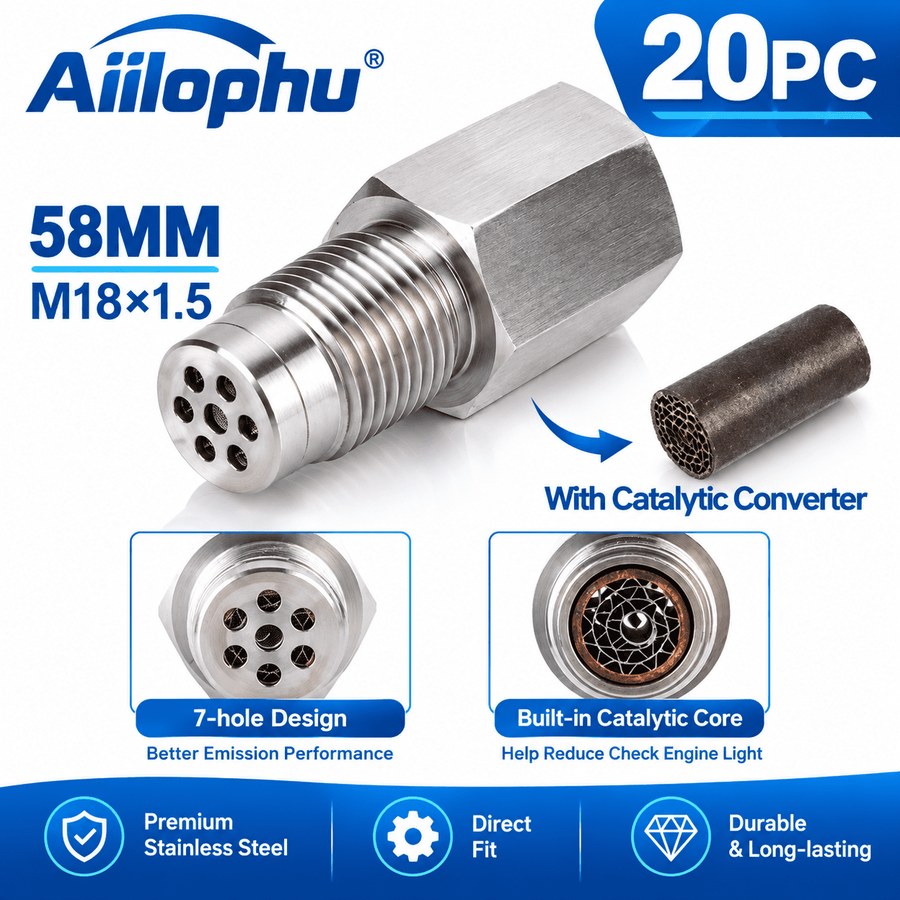
M18×1.5 O2 Sensor Spacer (20-Pack)
★ 20-Pack · StainlessCorrosion-resistant stainless steel M18×1.5 oxygen sensor spacers with integrated filter element—built for off-road, track, and sensor-diagnostics drawers across multiple vehicles.
- Standard M18×1.5 thread pitch fits the majority of US-market downstream O2 bungs
- Stainless steel body resists winter road salt and exhaust heat cycling
- Integrated filter chamber helps stabilize downstream sensor gas flow during diagnostics
Pick 2: starter pack (10-count)
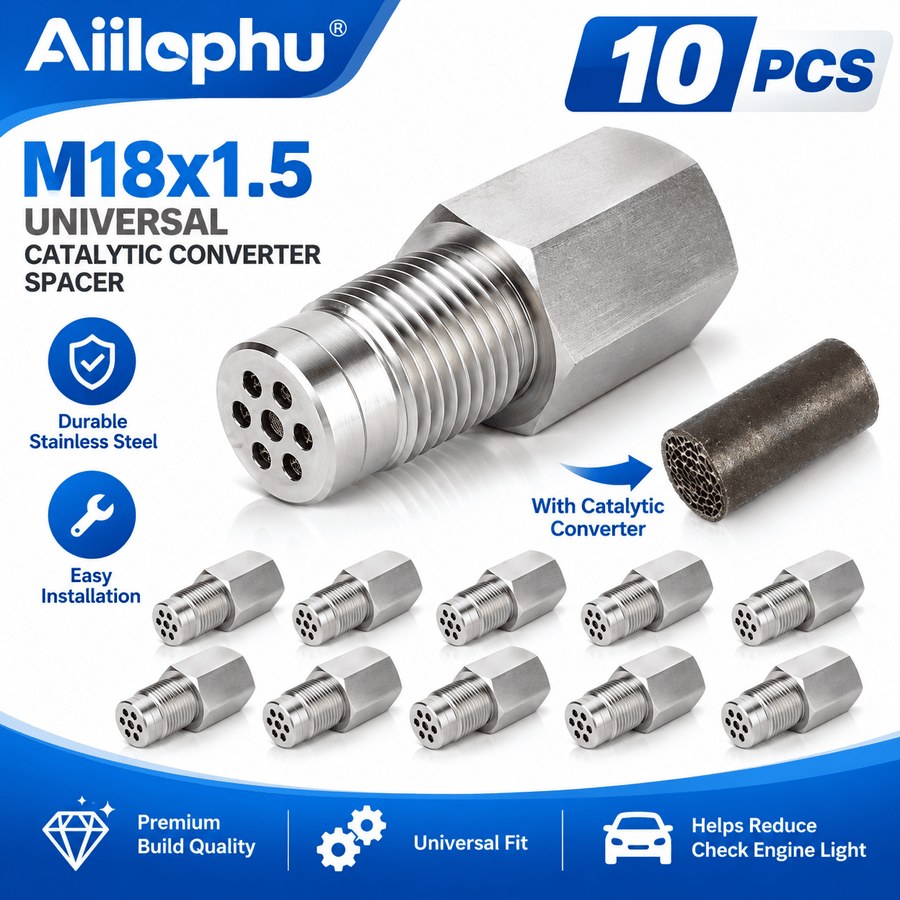
M18×1.5 O2 Sensor Spacer (10-Pack)
Starter PackSame stainless M18×1.5 thread geometry and integrated filter chamber in a 10-piece starter pack—practical for a single vehicle diagnostic install.
- Identical M18×1.5 stainless steel build and filter chamber as the 20-pack
- Lower-commitment 10-piece quantity for a single car or weekend diagnostic check
- Includes spares in case a filter element fouls in wet seasons
Install in six steps (~20 minutes)
- Engine cold, parking brake on. Exhaust burns skin, and sensors thread out more cleanly below 100 °F.
- Unplug the sensor: press the tab and pull the connector; never yank the wire.
- Remove the downstream sensor with a 22 mm slotted O2 socket so the harness clears cleanly.
- Thread the spacer into the bung first, hand-tight plus a quarter turn. A touch of anti-seize on the spacer's outer threads (away from the sensor tip) eases future removal.
- Install the sensor into the spacer: snug, then a quarter turn. Overtightening risks cracking ceramic internals.
- Reconnect, clear codes with an OBD2 reader, then drive a full drive cycle (cold start → highway → stop-and-go) before re-scanning.
How to verify it worked
- Live data: downstream O2 voltage should settle into a steadier band instead of mimicking the upstream sawtooth
- Fuel trims: STFT/LTFT within ±10% shows healthy upstream mixture control
- Patience: many ECUs need 50–100 miles before readiness monitors complete
Troubleshooting
| Symptom | Likely cause | Fix |
|---|---|---|
| Code returns within a day | Cat genuinely worn: a spacer can't mask a dead converter | Proceed to catalytic converter replacement |
| New random-misfire codes | Spacer seated crooked, or exhaust leak at the joint | Re-seat with anti-seize; check for leaks |
| Sensor won't thread | Not an M18x1.5 thread | Verify thread before forcing |
| CEL returns after rainy weeks | Filter element saturated or fouled | Swap in a fresh spacer from the pack |